

One of my favorite subreddits is r/Vinyljerk, where people make fun of those who ironically refer to their most coveted records as their “grailz.” But that’s not really what gets mocked the most, it’s a bit deeper than that. The real targets are the folks who confidently announce that the copy of Fleetwood Mac’s Rumours they found at Walmart is an impossibly rare treasure, or the people who hammer records directly into their walls like they’re decorating a medieval tavern. Then there’s those looking to fit in and they get the 10 millionth copy of King Crimson, referred to as “red screamy man” or a few other common cliches. Then there are the self-proclaimed audio shamans who insist the warmth of vinyl is so profound that listening to digital music is basically the same as eating a TV dinner while staring at a photograph of a steak.
Of course, “grail” comes from the Holy Grail, which if you’ve seen Indiana Jones and the Last Crusade, you know is the cup of a carpenter that causes grown men to age into skeletons if they choose poorly. Frankly, that seems less dangerous than getting into an online argument about turntable mats.
Anyway, I have some grailz of my own.
I’m one of those annoying people who prefers older pressings, especially anything from before the era of digital remasters. I want to hear the album the way people heard it when it first came out, warts and all. Plus, old records come with stories. Every used album has lived a life before it got to you. Maybe someone played it at a party in 1978. Maybe it sat in a smoky basement rec room next to a fake wood-paneled stereo cabinet. Maybe somebody cried to it after a breakup. I like that. The scratches, the worn corners, the faint smell of somebody else’s attic. It has character.
So yeah, I will take a beat-up old copy from a dusty record store over a shrink-wrapped reissue from a big box store almost every time. And honestly, I don’t buy much music newer than 1990 anyway. There are exceptions, of course. Every once in a while an album is so good that I need it on vinyl. But mostly I’m over here happily living in the past, flipping through records made before the internet existed and pretending that’s a perfectly normal personality trait.
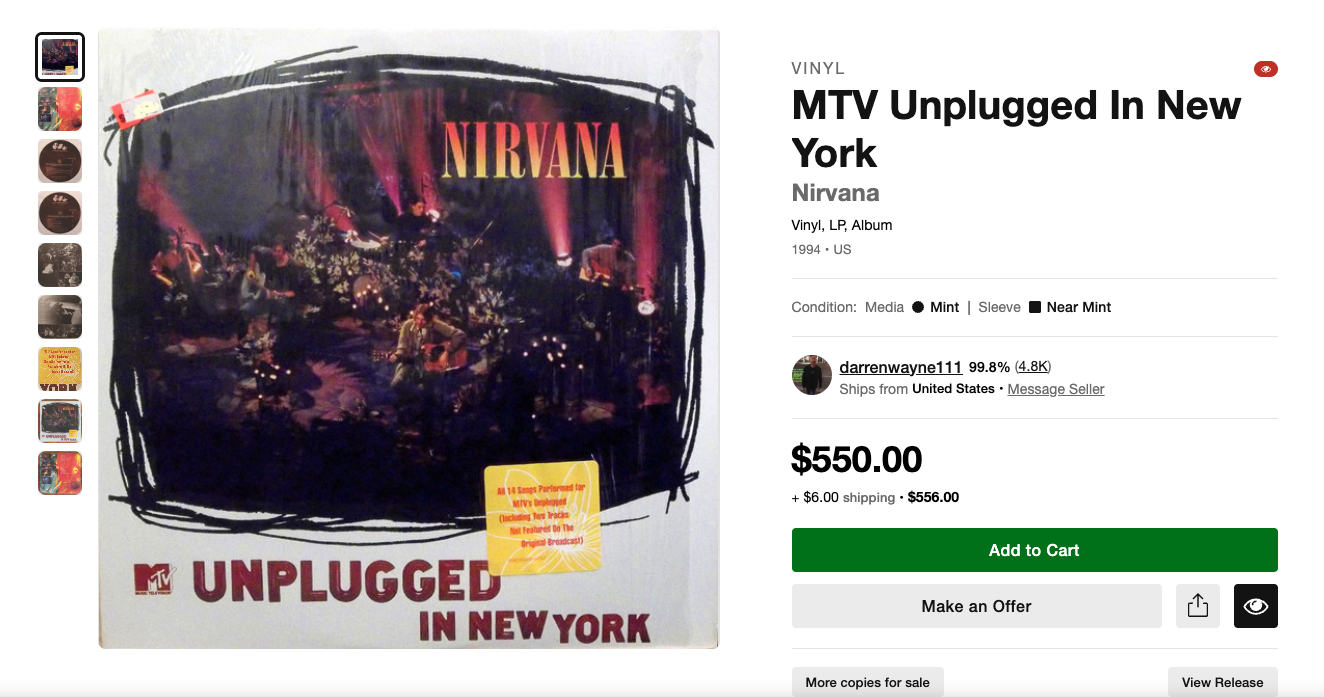
10. NIRVANA, MTV Unplugged in New York
This one sits in that frustrating category of “why is this so expensive, I already own sadness in my heart for free.”
On Discogs it hovers somewhere around $200 to $300, although I’ve seen copies creep even higher, like that screenshot at $550 which feels less like a price and more like a cry for help. At that point I start wondering if the record comes with Kurt Cobain personally showing up to apologize for inflation.
It’s a live acoustic album, which makes the pricing a little funny in a very specific vinyl-collector way. This is not exactly a “reference quality audiophile pressing” situation. Nobody is buying Unplugged because they want to hear the pristine sonic separation of a gently mic’d cello in a candlelit cathedral. You’re buying it because it is one of the most emotionally devastating and iconic live performances ever recorded, and you are apparently willing to financially suffer in order to own a physical reminder of that fact.
And I do want it. That’s the problem. It’s not even a rational desire. I just like the performance that much. There’s something about it that feels permanent in a way most live albums don’t. Like it shouldn’t exist in a world where you can close a tab and forget about it five seconds later.
But I haven’t been able to justify it yet. Every time I get close, I imagine explaining to my bank account that I spent several hundred dollars on a record where the main selling point is “sounds like a man quietly falling apart in real time on stage.”
Apparently it’s also somewhat scarce, which is record collector language for “you will absolutely talk yourself into this later at the worst possible moment.”
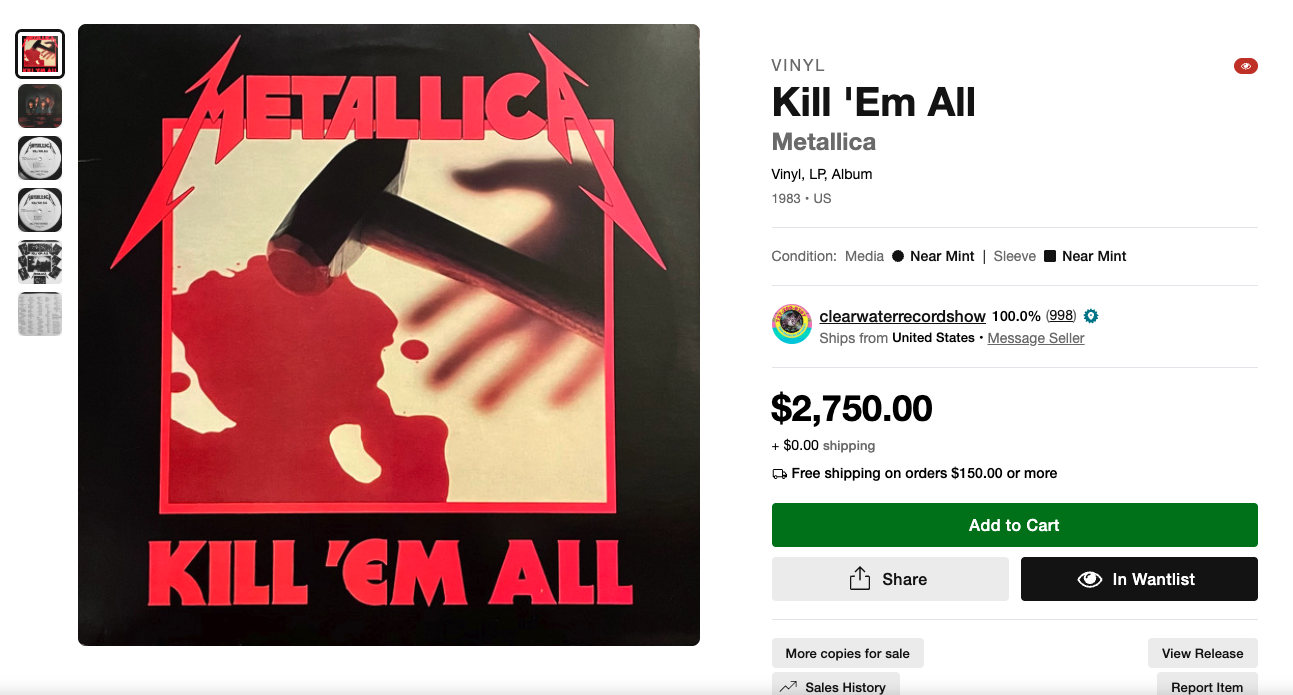
9. This ones a two-fer, Kill Em All and Ride The Lightning,
This one is really a two-for-one entry because I’m not emotionally strong enough to separate them.
These are the early Metallica albums, back when everything still sounded like it was recorded in a garage that may or may not have been haunted. Kill ’Em All is basically the sound of teenage chaos being unleashed with guitars, and Ride the Lightning is where they start figuring out that, oh, we can actually do this on purpose and make it even more intense.
Represses of both are easy enough to find, so this is not a “good luck, it only exists in a cursed monastery archive” situation. You can get them pretty affordably and still enjoy the music without selling a kidney or your favorite child’s college fund.
But originals? That’s where things get a little unhinged.
Those tend to live in the Discogs price zone where a listing suddenly jumps to something like $2,750 and you have to sit there for a second and ask yourself if this is a record or a lightly used motorcycle. At that point, I’m not even sure I’m buying music anymore. I think I’m acquiring a small financial decision that screams at me from a shelf.
And I get it. First pressings have the collector magic. The real ones. The “this came out when Lars Ulrich still had the energy to fight the entire world” versions. But I also have to live in reality, where I enjoy listening to music more than I enjoy explaining to my family why we are skipping vacations this year because I needed an original Ride the Lightning.
So for now, I admire them from a safe distance. Preferably through screenshots. On Discogs. Where they can’t hurt me.
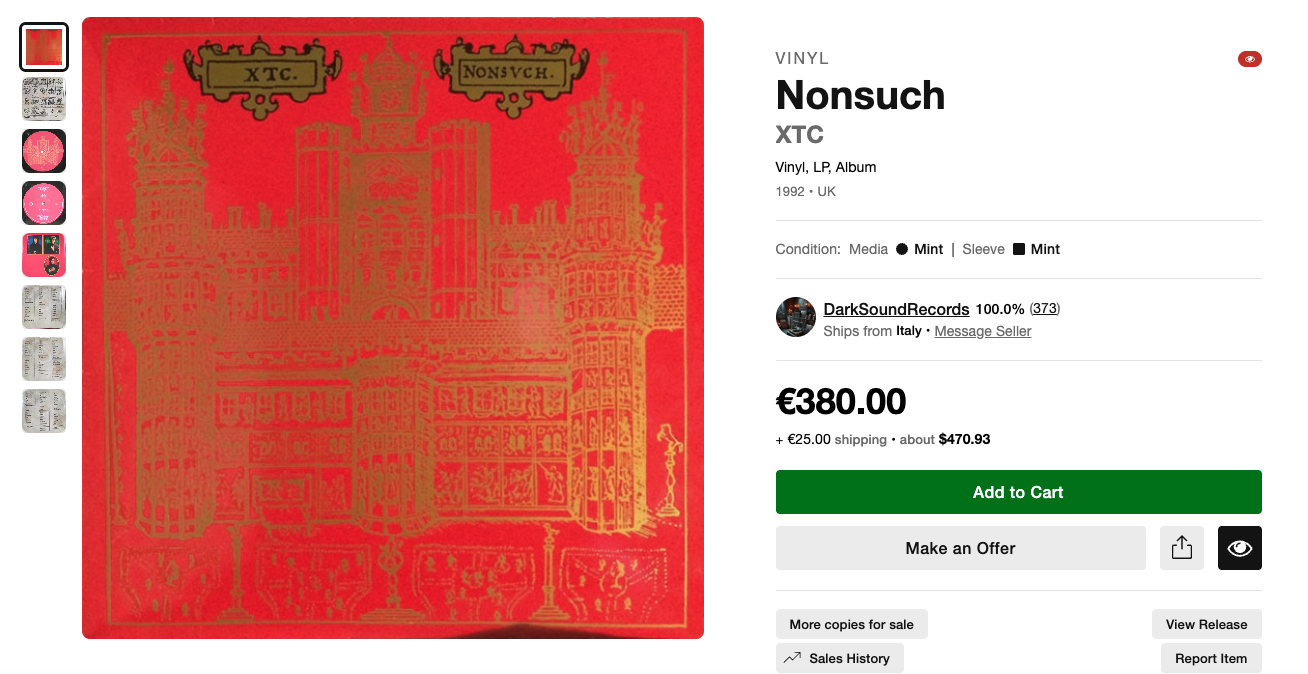
8. XTC, Nonsuch
I love XTC, and this album in particular is kind of a gateway drug into realizing you’ve been sleeping on them for way too long. This was the one that pulled me in originally, back when I somehow caught their short-lived MTV moment one random summer and thought, “wait, who is this and why does it feel like I’ve discovered a secret band that nobody told me about.”
Nonsuch is one of those records that feels both polished and slightly eccentric in a very intentional way, like it was built by extremely precise people who also enjoy quietly messing with your expectations. It’s clever without being annoying about it, which is harder to pull off than it should be.
On vinyl, though, it gets a little tricky.
Original pressings are mostly a European thing, and they do that classic collector move where the price immediately stops feeling like “buying a record” and starts feeling like “making a small but irreversible financial commitment.” I’ve seen copies sitting around the $400 range, and that Discogs listing at about £380 is very much in that same zone where you stop scrolling for a second and just stare at it like it might change if you refresh enough times.
And I do want it. That’s the problem. Not in a desperate, life-or-death way, but in the quiet way where you think, “this would be really nice to own” right before remembering you also like things like food, electricity, and not sleeping in a storage unit full of vinyl.
So for now it stays in the category of “admired from a distance.” A record I love, a band I love, and a price tag that suggests I should probably keep enjoying the streaming version while pretending I am financially responsible.
7. Rolling Stones, Sticky Fingers
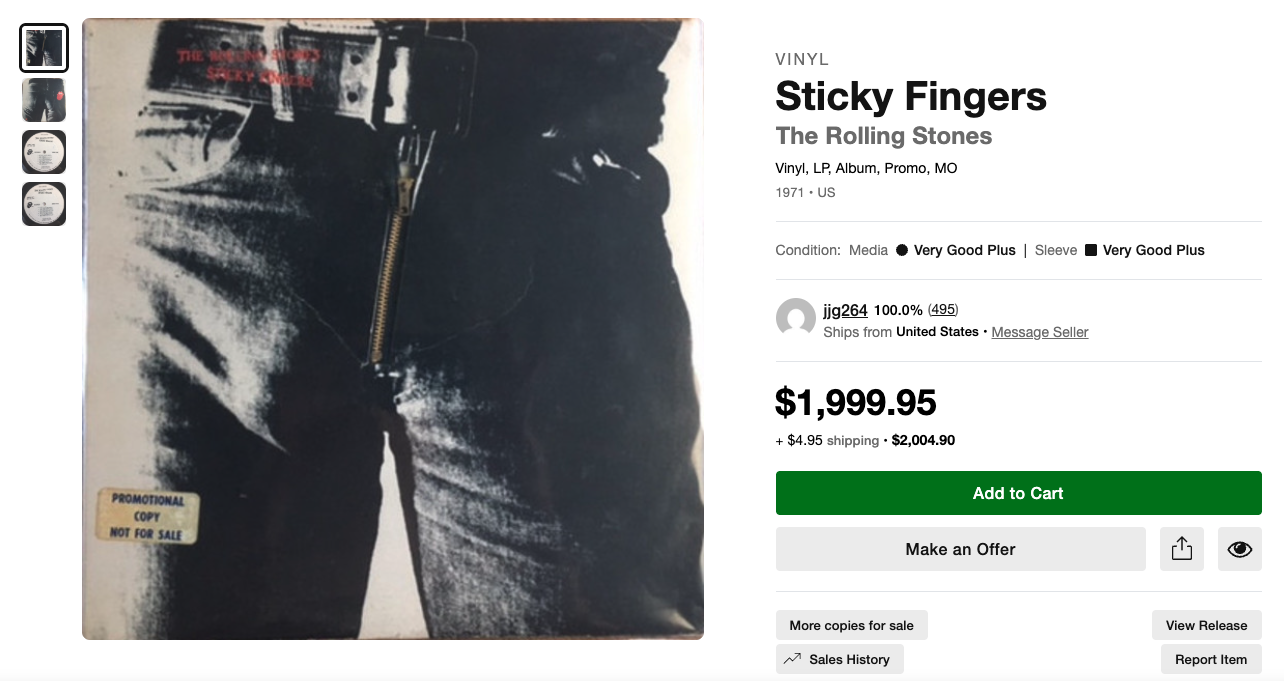
This is the one with the zipper, and yes, that is both the gimmick and the problem.
A clean, working original pressing of Sticky Fingers is actually not outrageously rare if you just want the record itself. You can find decent copies without too much pain. I already have one of those “character building” versions in my collection. It plays with a few skips, the zipper is technically still there, and it absolutely cannot be zipped without a high probability of either destroying the sleeve or summoning bad luck.
So in a way, I already own the punk rock version of this album whether I meant to or not.
But what I really want is a mint copy. One of those pristine originals where the zipper still works like it’s supposed to and you’re not afraid to touch it like it’s a museum artifact or a very delicate piece of industrial design history. The problem is that those sit comfortably in the “are you serious right now” price bracket. We are talking $1,000 plus, and sometimes you get the Discogs listings that drift up near $1,999.95, which is not so much a price as it is a negotiation tactic against happiness.
And I get it. This is one of those records where the packaging is basically part of the art. It’s not just an album, it’s a physical object that insists on being noticed. Andy Warhol put a literal working zipper on a pair of jeans and somehow that became one of the most collectible pieces of rock packaging ever made. Of course it did.
Still, I probably won’t replace mine anytime soon. There’s something about the beat-up version I already own that I like too much. It’s the first “cool collector” record I ever picked up, back when I was still figuring out that vinyl collecting is equal parts music appreciation and lightly controlled financial regret.
So yeah, I’d love a mint copy someday. But I also kind of like the one I’ve got. It already feels like it’s lived a life, even if that life mostly involved me trying not to force a zipper that clearly wants to remain in retirement.
6. The Cure, Boys Don’t Cry.
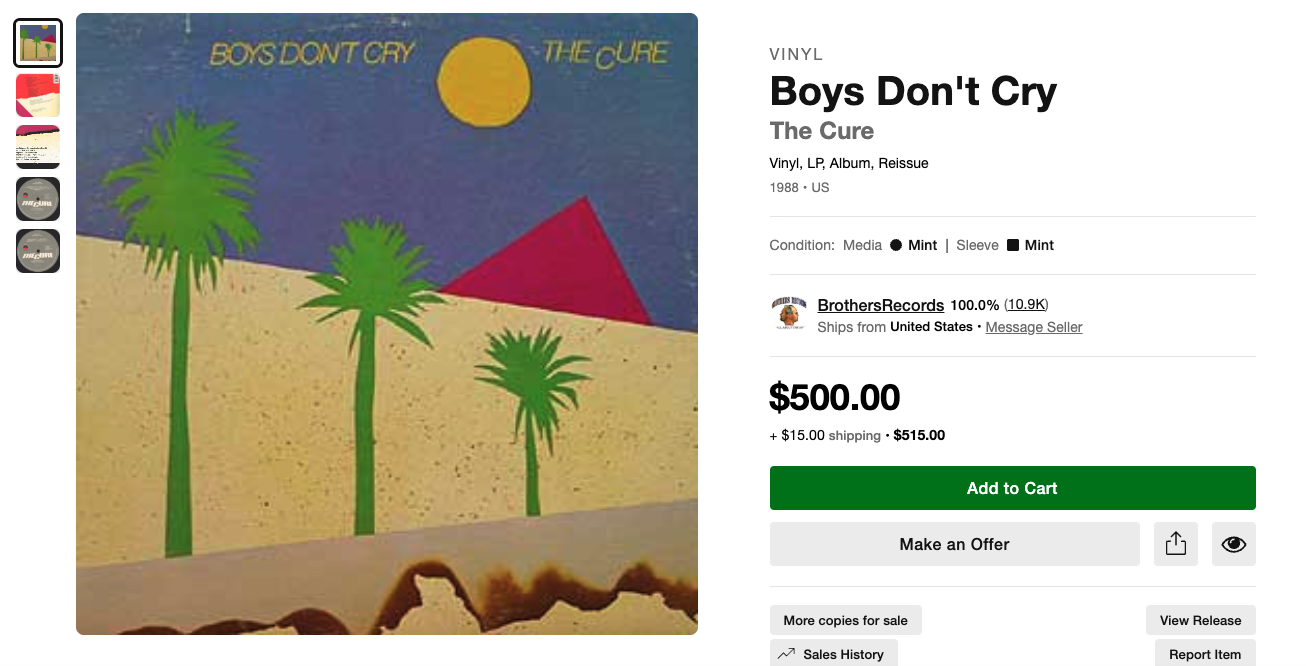
This one is basically the gateway drug for anyone who eventually ends up owning too many black T-shirts and developing opinions about reverb.
A first edition will run you somewhere around $800, which is the point where I start wondering if I’m buying a record or funding a small, emotionally complicated retirement plan for Robert Smith’s hair. And yes, I’ve seen copies floating around Discogs in that $500 range too, which feels slightly more “maybe” but still very firmly in the “you will think about this for three weeks and then not eat lunch for a while” category.
There are a few other 80s bands that could easily rotate into this spot, and honestly I could probably swap in some Smiths records depending on the day and my mood. This whole era of music lives in that same emotional neighborhood anyway. It’s all a little quirky, a little bleak, and somehow both dramatic and self-aware at the same time. Music that sounds like it was recorded in a rainy alley behind a poetry reading.
What I love about Boys Don’t Cry specifically is that it has that early Cure energy where things are still a bit scrappy, a bit weird, and not fully polished into the gothic cathedral sound they would later become known for. It feels like sadness before it got fully dressed up and made cinematic.
And that’s probably why I want it on vinyl in the first place. Not because I need a pristine audiophile experience or anything rational like that, but because this is the kind of music that feels like it should exist as a physical object. Something you pull off a shelf on a gray afternoon when the sky is already doing half the emotional work for you.
Still, $800 is a tough ask for “emotional support goth record,” so for now it lives in the same category as most of my other grailz: admired, occasionally searched, and immediately followed by me closing the tab like I just checked the price of vintage sadness.
5. New Order, Blue Monday
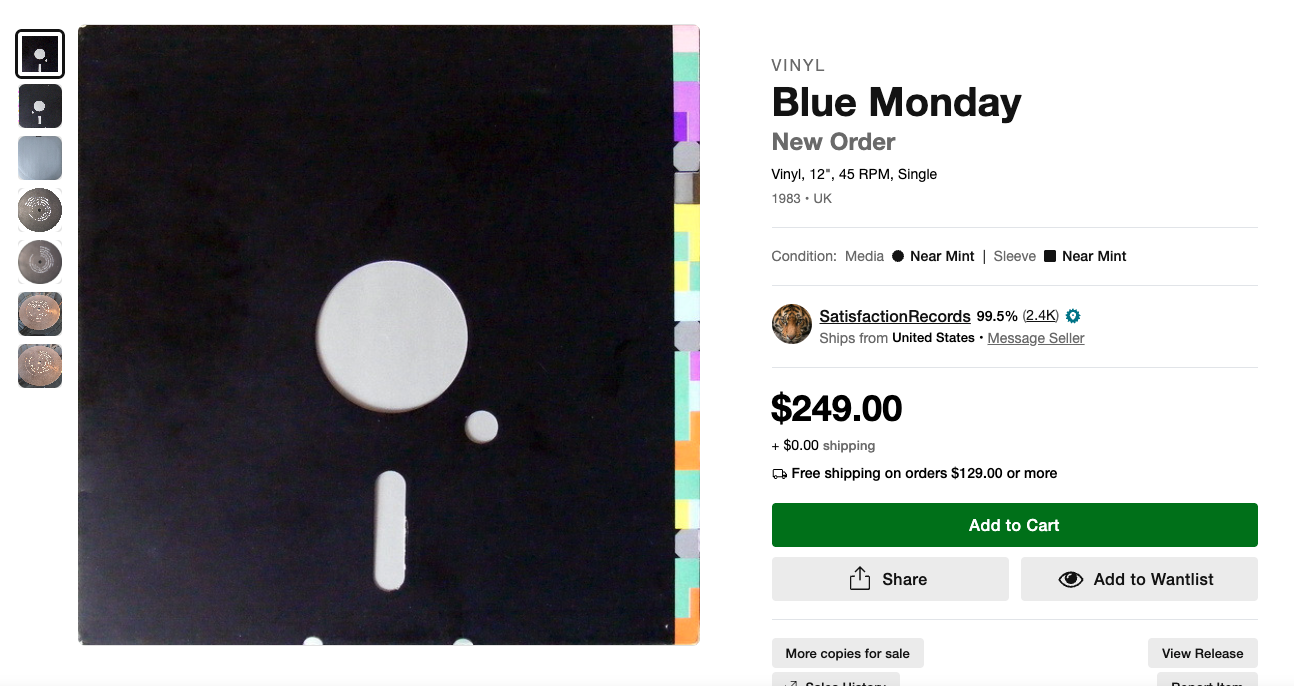
This is the one that proves packaging designers can absolutely ruin your financial planning.
The die-cut sleeve Blue Monday pressing is only a couple hundred bucks these days, but still feels slightly absurd when you remember you are technically paying that much for what is essentially one song that already exists in about 47 other formats, including “accidentally heard it in a grocery store in 2009.”
But then you see the sleeve and it all makes a little more sense.
It’s not just a record, it’s an object. That iconic floppy disk-inspired design, the weird punched-out cutouts, the whole “this looks like industrial machinery that learned how to dance” aesthetic. It is one of those rare cases where the physical packaging is doing almost as much cultural heavy lifting as the music itself.
And Blue Monday itself is obviously a monster of a track. It somehow manages to feel both robotic and emotional at the same time, like a machine trying to understand heartbreak and accidentally inventing club music instead. It is arguably one of the most recognizable synth tracks ever made, which makes the idea of paying $250 for it feel both insane and, unfortunately, kind of understandable.
That’s the tension with this one. It is absolutely hard to justify on a purely rational level. It is one song. A very long song, sure, but still one song. At some point you have to ask yourself whether you are collecting music or just paying for increasingly expensive ways to say “I have good taste in 80s electronics.”
And yet, I still want it. Not because I need another version of Blue Monday in my life, but because that sleeve is one of those designs that feels like it should be sitting on a shelf, just existing as a little artifact of a very specific moment in music and design history.
So for now it stays in the same category as most of these grailz: admired, slightly ridiculous, and safely unpurchased.
4. Quiet Riot, Quiet Riot II
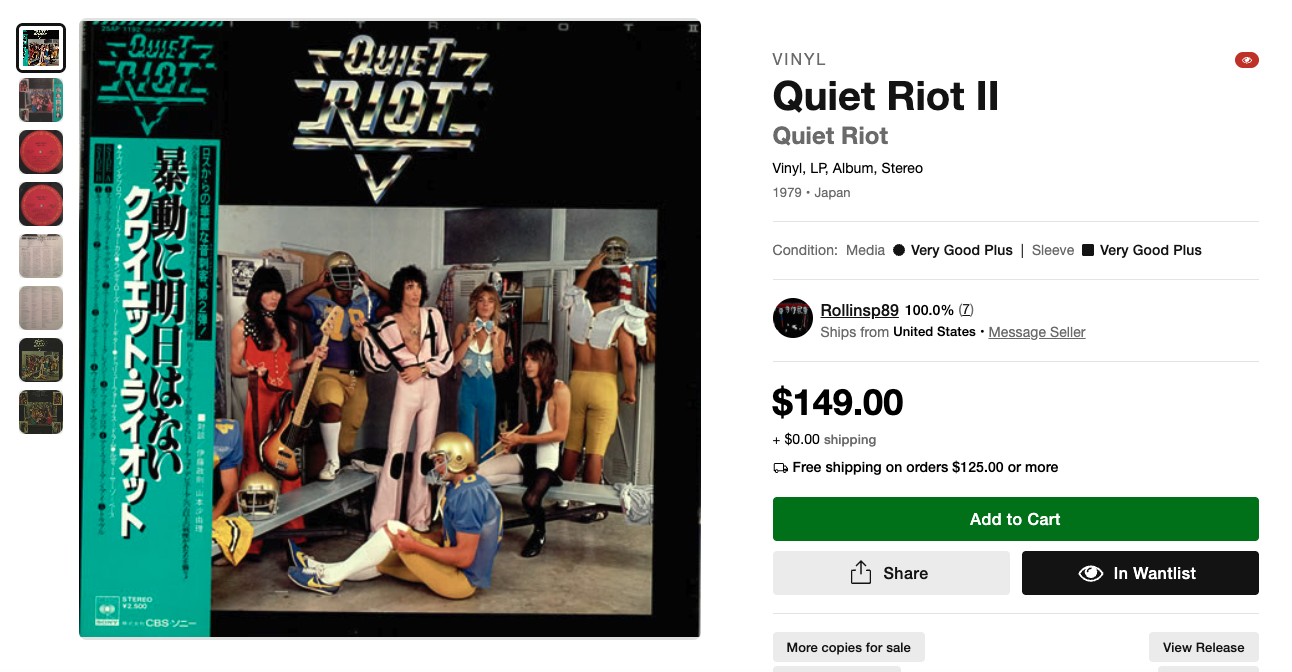
This one is deep in the collector weeds.
It sits around $150 on Discogs, which I should probably jump on because these were much higher just a few years ago. But I’ve never even heard the album, which is part of the appeal and part of the problem. It’s one of those releases that basically refuses to participate in modern life. Asia-only release, not on streaming (at least last time I checked), and generally existing in that frustrating zone where the music is technically real, but functionally behaves like a rumor.
So it becomes this weird situation where I want it before I’ve even had the chance to properly decide if I want it, which is probably how most Discogs wishlists are formed if we’re being honest.
I’ve always liked Quiet Riot, especially the early stuff tied to their original guitarist Randy Rhoads, who of course later goes on to become legendary for his work with Ozzy Osbourne. There’s something fascinating about that pre-fame, pre-mainstream version of a band, when everything is still a little rough around the edges and nobody involved has yet realized which parts of their story are going to become the “important” ones.
That’s part of why this record is so interesting to me. It feels like a missing piece of the timeline. Not just of Quiet Riot, but of that whole early metal ecosystem where bands were still figuring out what they were going to become, sometimes in countries and pressings that most people never even saw.
And that’s the hook. It’s scarce, it’s geographically weird, it’s not widely available, and it has that “if you know, you know” collector energy that immediately makes it more desirable than it probably should be.
So yeah, I’d love to hear it someday. And ideally own it too. But for now it lives in that category of records that are equal parts music, mythology, and me periodically checking Discogs like it might suddenly become emotionally responsible to buy it.
3. Guns N’ Roses, Lies
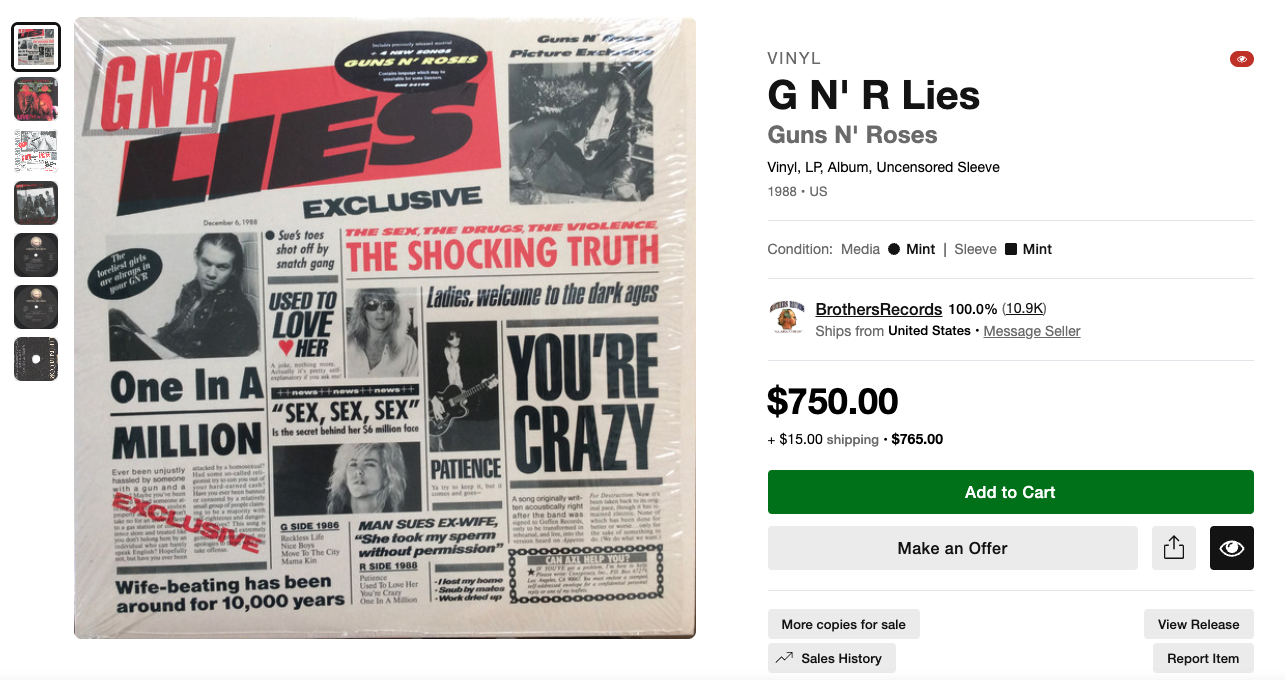
This is the one I have hovered over in a Discogs cart so many times that I’m pretty sure the algorithm thinks I’m emotionally unstable.
It usually sits around $100, but quite a bit more for a mint version, which is that annoying price range where it is not cheap enough to be an impulse buy, but not rare enough to justify the constant restraint. So I do the classic collector move, which is to wait for it to “come down,” fully aware that it is absolutely not going to come down. It is just going to sit there, quietly becoming more expensive while I pretend I’m making a strategic financial decision.
The truth is I want this one a lot.
“Patience” alone is doing a ridiculous amount of heavy lifting here. That song is basically Mount Rushmore tier for me. One of those rare tracks that feels like it exists outside of time, like it was always there and always will be there, waiting for you to randomly get hit in the chest by it on a quiet afternoon.
And then you’ve got the rest of Lies, which is this strange, messy, early Guns N’ Roses snapshot. Half acoustic, half barstool chaos, all captured right before everything exploded into stadium-level myth. It’s not polished, but that’s kind of the point. It feels like a band still figuring out exactly how dangerous and how famous they are about to become.
There is also that one track that always complicates the conversation a bit, the one that includes a racial slur. I’ve always thought that part is unfortunate, because underneath that baggage there is still a decent song trying to exist. But it is also one of those reminders that early rock history is not always tidy or comfortable, even when the music itself still holds up in other ways.
What I really want is a clean, mint original pressing. Something that lets me keep Patience in its proper physical form, like it deserves to live on vinyl the way it lives in my head. That’s the goal anyway. The reality is that a really nice copy probably pushes well past $100, and at that point I start doing the familiar collector math of “do I want this record or do I want groceries and continued participation in modern life.”
So for now it stays in the almost zone. The one I think about too often. The one I will probably eventually buy at the exact moment I stop pretending I’m going to find it cheaper.
2. Nirvana, Bleach
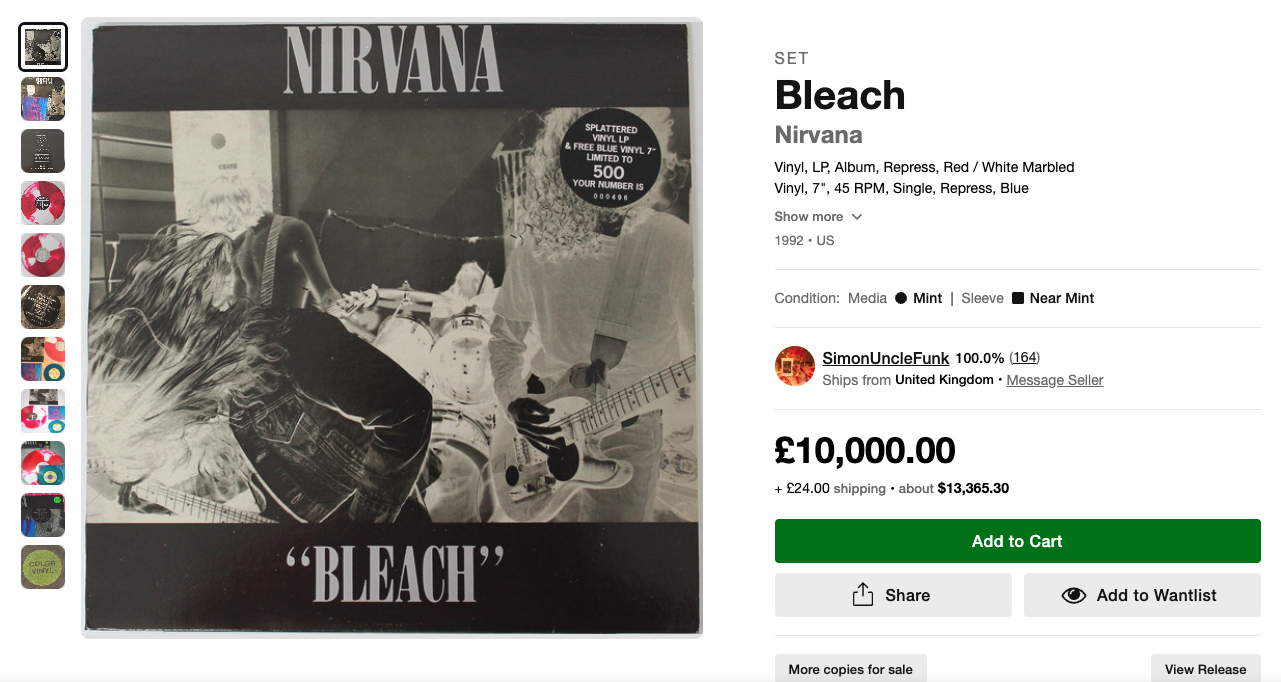
This is where the list stops feeling like collecting and starts feeling like you’re casually browsing listings for a small used car.
I’ve seen Sub Pop originals of Bleach sitting comfortably in the $2,500 and up range, and then there are the ones like the photo I’m showing here that are basically just yelling “what if vinyl, but emotionally irresponsible,” sitting at something like $13,000. At that point it’s not a record anymore, it’s a financial event with a jacket sleeve.
And the wild part is this is not even a rare “lost album” situation in the way people usually think about it. It’s Nirvana’s debut. It exists. Songs from this are on the radio. But it existed in a time when vinyl was not exactly the hot collectible it is now, which is part of why the original pressings ended up being relatively limited and are now basically trapped in collector mythology. Want a cassette copy? There’s like a billion out there to find.
What makes it harder is that I genuinely think this is some of Nirvana’s best work. Bleach has this raw, unfiltered energy that never fully makes it into the later, more polished records. It’s heavier, sludgier, and a little less self-aware in a way that feels completely honest. It’s a band still figuring out what they are going to become, without any idea they’re about to become one of the most important bands of the entire decade.
That’s the appeal. It feels unprocessed in the best way.
But that also means the original vinyl sits in this weird collector paradox where the demand is driven both by music history and scarcity, which is exactly how you end up with listings that look like someone accidentally added an extra zero and then decided to stand by it out of principle.
I would love to own it someday, but realistically this is one of those records where even thinking about pressing “buy” requires a brief internal monologue about housing costs, retirement plans, and whether I actually need to hear About a Girl on a first press Sub Pop or if I can continue being a normal person.
So for now it stays firmly in the “someday, maybe, in a different economic timeline” category. Admired, respected, and very much not casually purchased.
1. David Bowie, Diamond Dogs (Uncensored version)
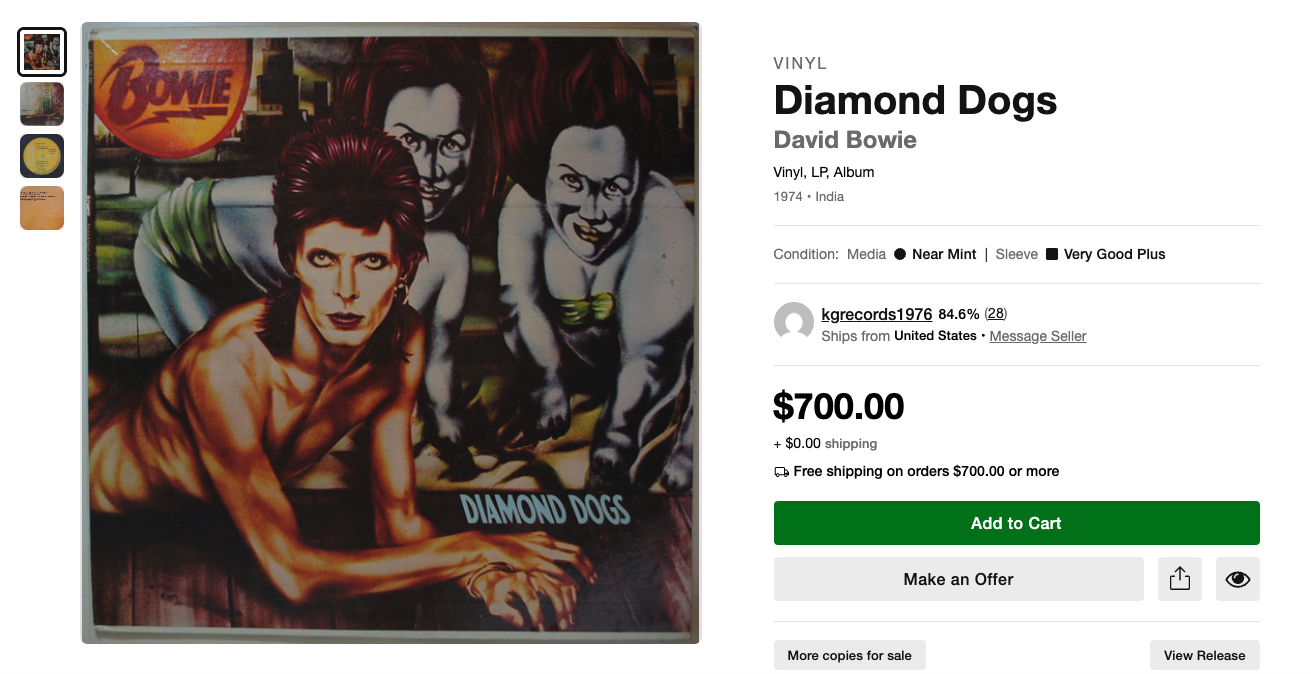
This is the one that really lives in the “I am not financially prepared for my own taste” tier.
The uncensored version with the full original cover art routinely sits around $7-10K, I found a recent auction where the art sold for $7K without even having the vinyl album included. Looking for David Bowie albums was when I first realized artists who have died have more expensive collectors albums. The same is the case with NASCAR diecasts believe it or not.
David Bowie would absolutely approve of this level of dramatic overcommitment to aesthetics. If there was ever an artist whose vinyl catalog could double as a museum of “what if we made this slightly more unsettling,” it’s him.
I’ve always loved records like this where the artwork is not just packaging, but part of the entire experience. The kind of cover that makes you pause for half a second before putting it on a shelf, like you’re briefly reconsidering whether your living room is emotionally ready for it. Bowie especially had a talent for that. Even when the music is accessible, there’s usually something just a little off-center in the presentation, like reality has been tilted a few degrees on purpose.
The uncensored Diamond Dogs cover takes that idea and just commits fully. It’s not subtle. It’s not trying to be background decoration. It’s an object that insists on being noticed, which feels very on-brand for Bowie in that era.
That’s part of why I want it. Not just the music, which is great on its own, but the full artifact. The combination of sound and visual identity that turns it into something more than just a record. I love albums like that, where the artwork feels like it belongs in the same conversation as the songs themselves.
Of course, that appreciation comes with the usual collector tax. $2,500 is a lot of money for anything that is not a house repair, a major life decision, or something that actively keeps you alive. So this one stays firmly in the “admire from a safe distance and occasionally wonder if I’ve lost my mind for wanting it” category.
But I still want it. Because of course I do. It’s Bowie. It’s weird. And it looks like it knows something I don’t.
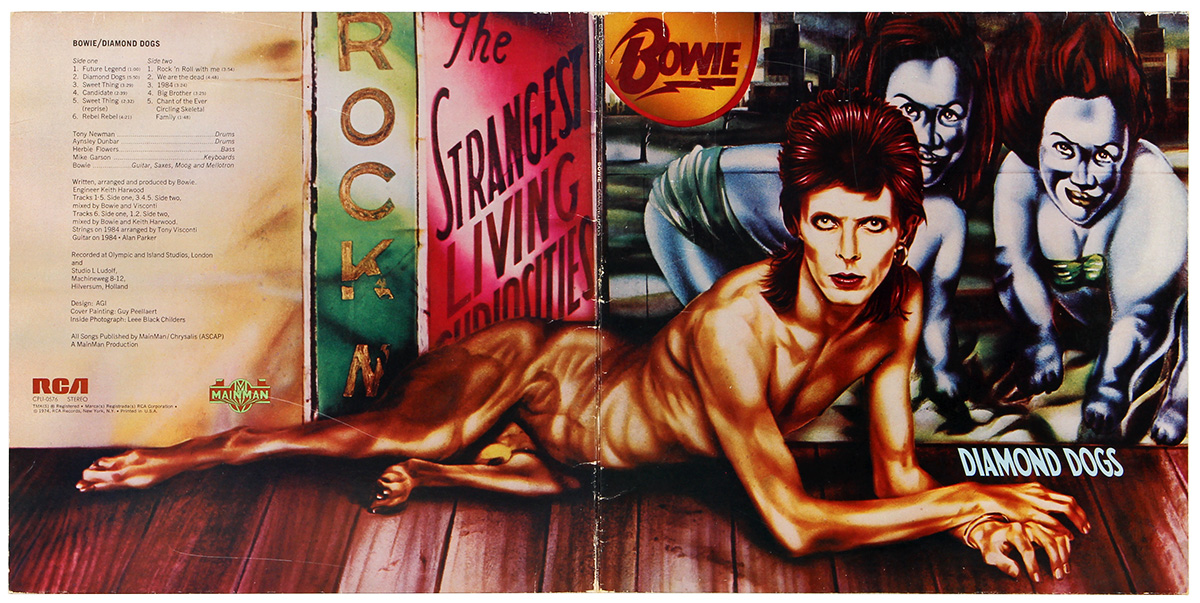
So those are the big ones for me, so keep your eyes peeled out at those garage sales. As you can see, some of these would be worth flying out to Toledo for.