

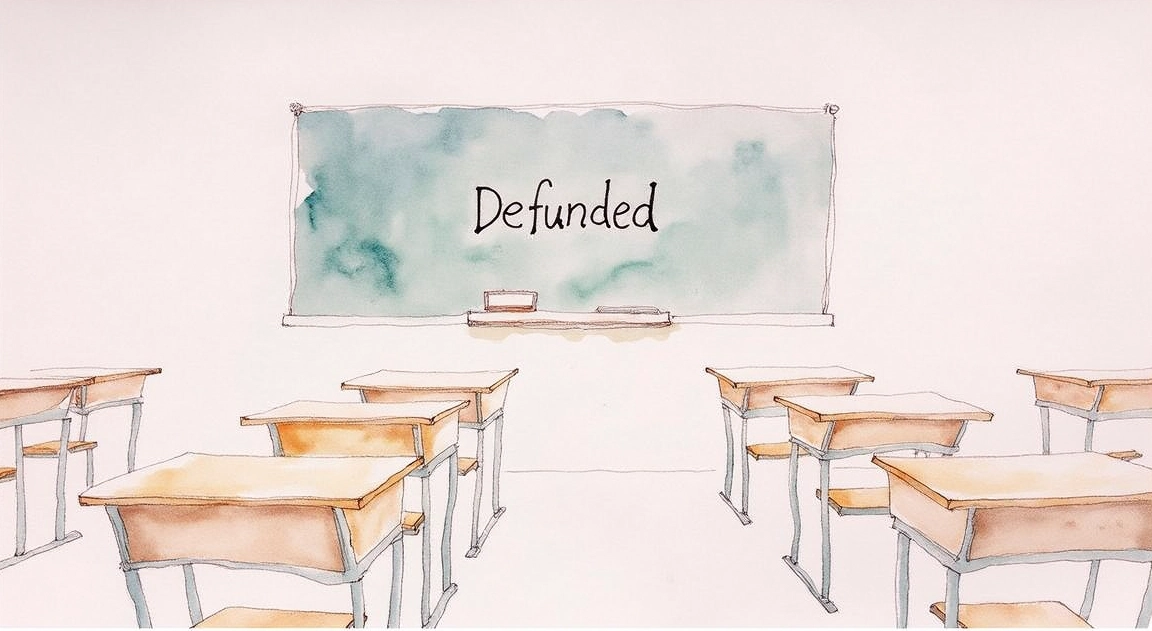
Every few months, a new “our schools are out of control and hurting our kids” story makes the rounds.
Kids identifying as cats and using litter boxes in classrooms.
Schools supposedly handing out tampons in ways that get twisted into something scandalous and absurd. “Tampon Tim” was the name they gave Tim Walz as if that was some big initiative he spearheaded.
These stories and rumors spread fast. They sound outrageous. They’re designed to.
They’re also not even real—or at best, wildly distorted versions of reality that collapse under even minimal scrutiny.
And yet, they stick, just as illusory truth effect propaganda is supposed to.
The Litter Box Myth (a.k.a. The Weirdest Moral Panic of Our Time)
Let’s start with the big one: the “litter boxes in schools for students who identify as cats” claim.
This has been repeated by politicians, amplified on social media, and paraded through school board meetings like it’s some forbidden truth the “mainstream” is hiding. It even made its way into my own kids’ district—someone literally ran for school board on this nonsense, fully prepared to hijack real discussions so we could all sit there debating imaginary litter boxes. Thankfully, they lost. But let’s not kid ourselves—they’ll be back, probably a little more polished next time, armed with a playbook from groups like Moms for Liberty that have had more success turning this kind of outrage into actual influence elsewhere.
And that’s the part that should concern people: this isn’t just random internet stupidity leaking into real life. It’s becoming organized.
Case in point—look at the exchange between James Talarico and Stan Gerdes over the so-called “Furries Act.” It’s one of those rare moments where the absurdity gets dragged into the light. Talarico does something radical: he asks for evidence. Not a speech, not a vibe—just a single, verifiable example. Name one school. One district. One actual case where this is happening.
And the response?
Nothing.
Because there is nothing.
What you’re seeing in moments like that is the quiet part said out loud: some of these bills aren’t meant to solve problems—they’re meant to create headlines, fire up a base, and keep a completely fabricated issue alive just long enough to do political damage. And people keep electing the people who are doing this.
James Talarico is great, by the way. The way he stays calm through such a bizarre exchange, asks and responds so intelligently. I really hope this is the future of politics and this guy doesn’t get chased out of town somehow.
If more people actually listened to these kinds of hearings (or the media actually reported on it effectively) people might actually see the scheme they’ve got going on here.
The Tampon Panic
Then there’s the outrage about tampons in school bathrooms—another story that’s been twisted beyond recognition and no matter how much it’s debunked, people still spread it all matter-of-factly across social media to this day.
Back when Tim Walz was running for Vice President, Republicans pushed the nickname—“Tampon Tim”—aimed at Tim Walz, based on the claim that he “forced schools to stock tampons in boys’ bathrooms.” It’s catchy, it’s dumb, and it’s built on a misrepresentation. And people still call him it to this day.
What actually happened? He signed a law ensuring menstrual products are available to students who need them. That’s it. No bizarre mandate, no ideological stunt—just a basic effort to address a real, everyday need for kids who might not otherwise have access.
Snopes did the homework on this one and showed exactly how a straightforward policy got spun into something provocative and misleading—essentially turning a hygiene issue into a culture war talking point, complete with a side of transgender panic baked in for maximum outrage.
And once that framing took hold, it mutated depending on the audience:
- “They’re putting them everywhere for ideological reasons”
- “This is proof schools are pushing an agenda”
- “This is wasteful and unnecessary”
What gets completely lost is the actual point: making sure students have access to basic hygiene products without stigma or disruption to their day.
Instead, it gets repackaged as yet another example in the growing pile of “schools have gone off the rails” narratives—less about solving problems, more about keeping people angry. Not just angry at liberal politicians or liberal voters, but specifically angry at schools.
The “Critical Race Theory” Panic
And then there’s Critical Race Theory—probably the most successful example of turning an obscure academic concept into a full-blown culture war weapon.
Critical Race Theory, in its actual form, is a graduate-level legal framework taught in law schools. It examines how laws and systems can produce or reinforce racial inequalities. It is not an elementary school curriculum. It is not something your third grader is bringing home in a worksheet next to their spelling words.
But that didn’t stop it from becoming a political buzzword.
Somehow, “teaching basic history about racism in America” got rebranded as “teaching CRT,” and then that got reframed as something dangerous, divisive, or even anti-American. From there, it spread like wildfire—parents showing up at school board meetings furious about something that, in most cases, wasn’t even being taught.
Just like the litter box myth, just like the tampon outrage—it’s not about precision. It’s about perception.
And once the narrative takes hold, it gets reshaped depending on the audience:
- “They’re indoctrinating kids”
- “They’re teaching students to hate their country”
- “They’re dividing kids by race”
- “They’re teaching them to be ashamed of being white”
What gets lost is the reality: schools teaching history—sometimes uncomfortable history—is not the same thing as pushing a niche legal theory on children.
But nuance doesn’t travel well on social media. Fear does.
And just like the other examples, the goal isn’t to have a good-faith discussion about curriculum. It’s to create suspicion. To make parents feel like something inappropriate or dangerous is happening behind closed classroom doors.
From Distrust to Defunding
Once confidence in public schools takes a hit, the next step becomes politically viable:
- Cut funding
- Oppose referendums
- Push voucher programs
- Expand privatized alternatives
It’s a slow bleed. Not a dramatic shutdown—just enough skepticism and frustration to justify pulling resources away little by little.
And suddenly the conversation isn’t about improving schools anymore. It’s about replacing them.
The Privatization Debate (Let’s Be Honest About It)
There are real arguments on both sides of privatizing education, so let’s lay them out without the noise.
Arguments For Privatization
- School Choice: Parents can choose what’s best for their kids
- Competition: Schools must improve to attract students
- Flexibility: Less bureaucracy, more innovation
- Tailored Education: Specialized programs or values-based education
Arguments Against Privatization
- Inequality: Access isn’t equal—some families benefit more than others
- Public School Drain: Funding gets pulled from already struggling systems
- Accountability Gaps: Private schools don’t always face the same standards
- Segregation Risks: Economic and social divides widen
- Special Education Shortfalls: Public schools serve everyone; private schools often don’t
This Isn’t About the Facts
If these claims were just misunderstandings, they’d disappear once debunked.
They don’t.
Because the goal isn’t accuracy—it’s erosion of trust.
If you can get enough people to believe that schools are:
- catering to absurd demands
- pushing bizarre agendas
- wasting taxpayer money
…then you don’t need to argue policy. You just need to say:
“Why are we funding this?”
And that’s where things start to shift from outrage to action.
It’s Not Just The Right Who Are Outraged
I’m outraged about the lies they’re outraged about because of the impact it’s having. Take for example the book bans—another front in the same “schools are out of control” narrative.
Libraries and classrooms are being scrutinized over novels and texts that deal with race, gender, sexuality, or just uncomfortable topics in general. Often, the books being targeted are perfectly age-appropriate, award-winning, or classics. But because they touch on issues some adults find controversial, they’re suddenly labeled “dangerous” or “inappropriate” and pulled from shelves.
A link if you’d like to dive in to what books have been banned in schools around the country.
https://pen.org/book-bans/pen-america-index-of-school-book-bans-2023-2024
Examples of banned books that I think everyone should be bothered by:
1. Dear Martin by Nic Stone
Why it matters: A contemporary YA novel that explores structural racism and police brutality through the eyes of a Black teen trying to live “by Dr. Martin Luther King Jr.’s teachings.” Its honest, emotional depiction of systemic bias connects with students who rarely see their lived experiences reflected in literature.
Why banned: Targeted for its candid discussion of race and police violence — the very themes that make it educationally valuable.
Ridiculous because: Censoring stories about real social issues literally shields students from understanding their world.
2. Fahrenheit 451 by Ray Bradbury
Why it matters: A classic cautionary tale about censorship and authoritarian control, where books are outlawed and “firemen” burn them. A meta‑ironic example of a book about censorship being censored.
Why banned: Some districts have removed it over complaints about language or perceived offensive content.
Ridiculous because: It’s literally a warning against exactly this kind of censorship — removing it shows a stunning misunderstanding of the book’s message.
3. To Kill a Mockingbird by Harper Lee
Why it matters: A foundational text on justice, racism, and morality in American literature. Teachers use it to launch discussions about prejudice and history.
Why banned: Objections to racial slurs and uncomfortable depictions of sexual violence.
Ridiculous because: The hardest truths about American history are exactly what students need to confront, not hide from.
4. The Grapes of Wrath by John Steinbeck
Why it matters: A major American epic about economic inequality, migration, and dignity during the Great Depression. It has shaped generations’ understanding of poverty and resilience.
Why banned: Complaints historically center on profanity, perceived negative portrayals of religion or rural people.
Ridiculous because: Critics miss the point — it invites empathy for struggles too often ignored.
5. The Catcher in the Rye by J.D. Salinger
Why it matters: One of the most influential coming‑of‑age novels ever written, exploring alienation, identity, and the myths teens navigate.
Why banned: Objections to profanity, teenage rebellion, themes like drinking and lying.
Ridiculous because: The book is about grappling with the very issues teens face — banning it erases that dialogue.
6. Looking for Alaska by John Green
Often the most banned book in recent years — tracked as the #1 challenged title over four years.
Importance: Explores grief, coming of age, identity, and meaning — core YA themes.
Ban rationale: “Sexual content,” language; but this removes nuanced portrayals of emotional growth.
7. Wicked: The Life and Times of the Wicked Witch of the West by Gregory Maguire
Banned in some states for “raunchy material.”
Importance: A subversive, literary revision of a cultural touchstone that sparks thinking about perspective and morality.
Ridiculous because: Adult themes don’t make a book inherently unfit for age‑appropriate discussion.
8. The Perks of Being a Wallflower by Stephen Chbosky
Also banned recently.
Importance: A heartfelt look at teenage mental health, identity, trauma, and friendship.
Ban reaction: Some object to frank discussions of sexuality and mental health — precisely what teens need to talk about.
9. Nineteen Minutes by Jodi Picoult
Highly challenged nationwide due to sensitive topics.
Importance: A novel about the aftermath of a school shooting and its consequences — heavy but deeply relevant.
Concerning because: Silencing stories about trauma doesn’t make it go away.
10. The Handmaid’s Tale (and graphic novel adaptation)
Recently banned in multiple districts/states.
Importance: A modern classic about gender, power, and authoritarianism — extremely relevant to civic literacy.
Ridiculous because: It teaches critical thinking about society and rights, not sexual titillation.
11. Beloved by Toni Morrison
Frequently banned for violence and disturbing content.
Importance: A masterpiece about slavery’s psychological legacy — vital for deep historical empathy.
Ridiculous because: Hard history is part of understanding our collective pas
📉 Patterns in Recent Book Bans
📌 What is being targeted:
• Books with Black, LGBTQ+, or other marginalized voices.
• Works addressing race, gender identity, or sexual orientation.
• Literature that challenges assumptions or contains realistic depictions of life.
📌 Why this matters:
These bans don’t just remove “offensive” language or scenes — they erase stories that expand empathy, critical thinking, and understanding of diverse lived experiences. The trend reflects a broader debate over whose stories are considered appropriate or worth telling — not just what’s suitable for certain ages.
Why Book Bans Are Problematic
- They often misinterpret the educational value of a work and treat complexity as inherently dangerous.
- Removing books disproportionately impacts students from marginalized communities who may see themselves reflected in literature.
- The most frequently banned books are often important windows into history, society, and human psychology, not mere “controversial content.”
Why This All Gets Under My Skin
These attacks on education, mostly designed for the agendas of of charter school cronies, frustrates me to no end.
Because I’ve seen what happens at the local level when this narrative takes hold where there aren’t even many charter school options, so we just get left with owrse schools. School referendums fail. Funding gets voted down. Necessary improvements stall out.
And a lot of the opposition comes from people who don’t have kids in the system. You hear it all the time:
“Why should I pay for someone else’s kids?”
And I get it—on a surface, transactional level. But that’s not how a functioning society works.
Public education isn’t a personal purchase. It’s shared infrastructure. You benefit whether you have kids or not—through a more capable workforce, safer communities, and a healthier economy. Just like our roads, our fire departments, and hopefully some day our healthcare because people dying because they can’t afford a doctor is pretty barbaric.
When we stop investing in education, we don’t save money—we just pay for it later in worse ways.
The Bottom Line
The argument for privatization leans heavily on frustration with the system—but too often, that frustration is fueled by things that aren’t even real.
Litter boxes in classrooms? Debunked.
Tampon panic narratives? Overblown and distorted.
Critical Race Theory in K–12 schools? Misdefined, misapplied, and massively exaggerated.
But the damage those stories do is very real and no one seems to be making the effort to heal it. The outrage gets amplified for weeks and weeks. The retractions and dismissals of phony bills gets reported one afternoon on page 12. And who even reads newspapers anymore?
And when you strip all of that away, the case for abandoning public education just isn’t that strong.
What is strong is the case for improving it:
- Support teachers instead of turning them into political targets
- Properly fund special education programs
- Invest in facilities, materials, and staffing
- Focus on real problems, not viral distractions
Because the goal shouldn’t be to win arguments built on nonsense.
It should be to build a system that works—for every kid.
And that only happens if we stop falling for the outrage machine long enough to actually invest in what matters.