

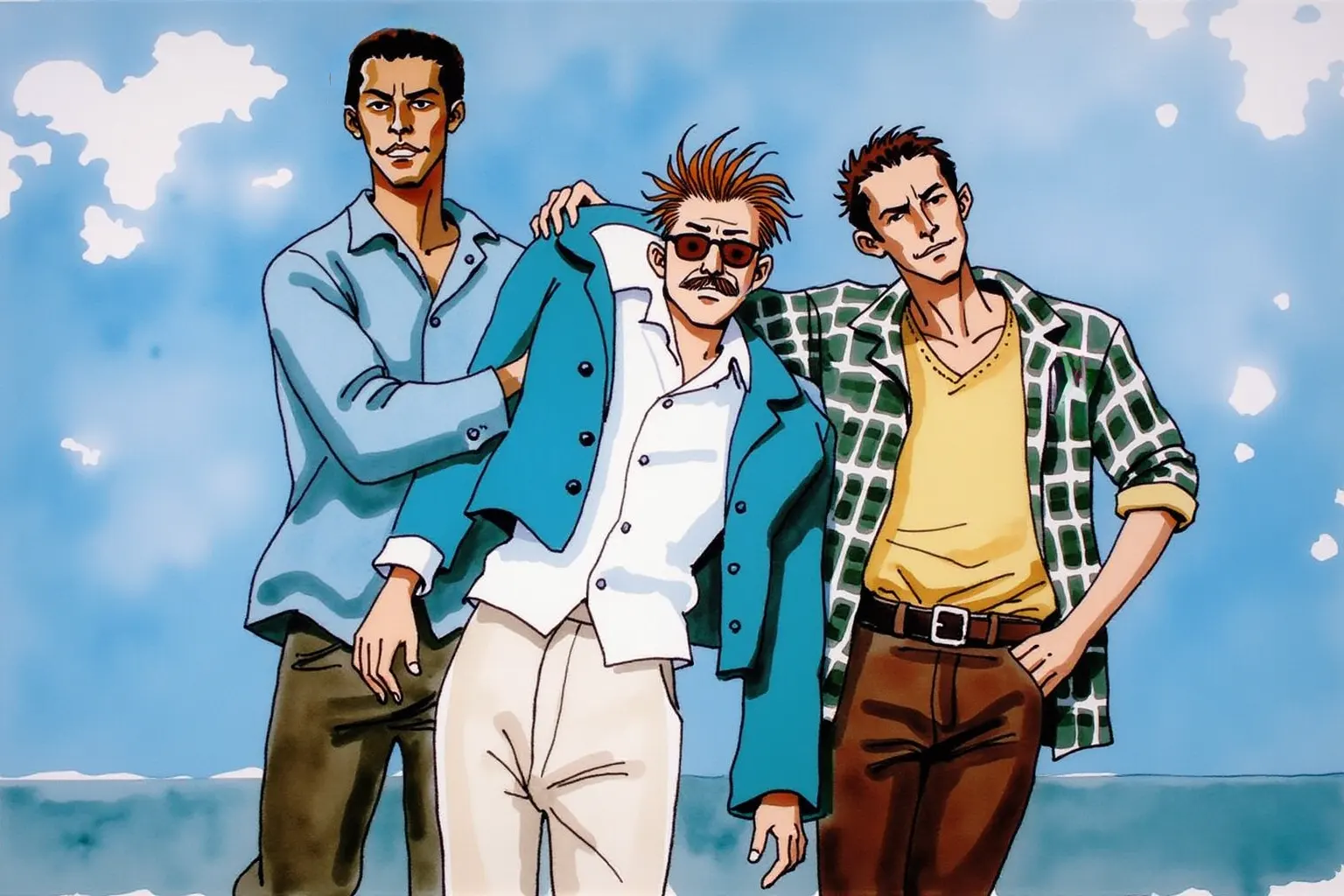
Here’s my top 10 list of cheesy 80s movies—but not just any cheesy. We’re talking critically recognized as cringe-worthy even in their own decade. To make the cut, a movie has to score under 60% on Rotten Tomatoes—because if it’s over that, it’s basically “good cheesy,” the kind of movie you can watch and still pretend you have taste. Airplane!? 97%. Classic? Absolutely. Cheesy? Only if you count genius-level absurdity. Ferris Bueller, Say Anything, Pretty in Pink? Loved then, adored now, but they’re not the kind of films that make you squirm in your high-waisted jeans.
Nope, we’re hunting for the movies that were basically screaming, “I am ridiculous, and you should be embarrassed for liking me,” even back in 1989 when I was watching all of these on HBO. These are the films that lean into over-the-top plots, baffling logic, and hairstyles so big they might have had their own zip code. Watching them now is like opening a time capsule of absurdity, and honestly… it’s glorious.
#10 License to Drive
24% on Rotten Tomatoes
In License to Drive, teenager Les Anderson (Corey Haim) wakes up thinking his life can’t possibly get worse—then promptly fails his driver’s test and discovers the universe enjoys bullying him. License-less and humiliated, Les still refuses to cancel his date with the effortlessly cool Mercedes Lane (Heather Graham), because nothing says “responsible teen” like stealing your family’s prized luxury car to impress a girl.
Naturally, things spiral immediately. Mercedes sneaks alcohol, passes out cold, and leaves Les in charge of both a blackout date and a very stealable car. Panicking, he calls in his worst possible backup option: his unhinged, rule-allergic best friend Dean (Corey Feldman). What follows is a perfect storm of bad decisions, parental fury, and the kind of reckless freedom that only unlicensed teenagers seem brave (or dumb) enough to attempt.
A lot of people associate the two Coreys with other, more famous movies—but for me, this is the Corey Haim/Corey Feldman film. I watched it endlessly and absolutely loved the fantasy of kids driving when they absolutely, definitely should not be. And while I enjoy the borrowed-car-with-parents-clueless vibes of Ferris Bueller’s Day Off, License to Drive just hit harder for me particularly. Maybe it’s messier. Maybe it’s dumber. Or maybe it just felt more real—because nothing is more relatable than being a teenager, panicking, and making everything worse one decision at a time. In Ferris Bueller, things felt more under control because you just knew Ferris’s charisma would make everything ok, and I guess that’s why that is the better rated movie.
#9 Maximum Overdrive
14% on Rotten Tomatoes
In Maximum Overdrive, the world’s machines suddenly decide they’re done taking orders from humans—and honestly, same. Directed by Stephen King during a period best described as chemically confident, the movie asks one extremely important question: what if trucks, vending machines, and lawn mowers all woke up one day and chose violence?
The plot (using the term generously) follows a ragtag group of unlucky humans trapped at a truck stop while sentient semis circle them like sharks with diesel engines. Leading the charge is Bill Robinson, played by a young Emilio Estevez, whose presence alone made this movie feel legit to me. I didn’t care how ridiculous things got—Emilio was there, so clearly this was a real movie and not just a fever dream involving homicidal ice cream trucks.
And let’s talk about those evil trucks. They rule. They don’t sneak. They don’t stalk. They just aggressively loom, rev, honk, and murder with zero subtlety. One of them even has a giant goblin face on the front, which is the exact level of restraint this movie was going for. Subtlety is dead. The trucks have won.
The whole thing is blasted wall-to-wall with an AC/DC soundtrack, which should, in theory, be enough to carry any movie to greatness. Apparently not—because despite the riffs, the explosions, and the sheer audacity, Maximum Overdrive is famously low-rated and barely remembered. Which is wild to me, because that just makes it cooler. This movie doesn’t care if you like it. It’s loud, dumb, mean, and committed to the bit.
So yeah, maybe it’s “bad.” Maybe critics hated it. But to me, it was perfect: killer trucks, nonstop AC/DC, and Emilio Estevez convincing me—against all logic—that this chaos was awesome. And honestly? I still kind of root for the trucks.
#8 Over the Top
32% on Rotten Tomatoes
In Over the Top, subtlety takes one look at the premise and immediately walks out of the room. This is a movie where arm wrestling is treated with the same gravity as boxing, war, and possibly the space race. And somehow—somehow—it works.
Sylvester Stallone stars as Lincoln Hawk, a long-haul trucker with a trucker name, a trucker hat, and a trucker life philosophy that can be summarized as: when things get tough, turn your hat around. He’s estranged from his son, locked in a custody battle with a rich, icy grandfather, and determined to win his kid back the only way the ’80s would allow—by entering a high-stakes, nationally televised arm-wrestling tournament.
On paper, it’s absurd. In execution, it’s even more absurd. Grown men flex veins the size of garden hoses while inspirational music swells and Stallone squints like emotional growth is physically painful. But here’s the thing: as a kid in the ’80s dealing with parental custody stuff of my own, this movie hit. Hard. Beneath the sweat, denim, and slow-motion bicep shots, it’s a story about wanting to be chosen by your parent—and that’s a theme that cuts way deeper than it has any right to.
The movie was never cool, never subtle, and never particularly respected. But that sincerity is exactly why it worked for me. Over the Top isn’t winking at you. It believes in itself completely. It believes arm wrestling can fix families. It believes love can be measured in grip strength. And when you’re a kid feeling caught in the middle, that kind of unashamed emotional commitment feels real.
So yeah, it’s ridiculous. But it’s also heartfelt, loud, and weirdly comforting. And if turning a hat backwards and winning an arm-wrestling tournament could fix your family in the ’80s? Honestly, as a kid in a broken 80s home, that felt like hope.
#7 Summer School
57% on Rotten Tomatoes
In Summer School, the true horror isn’t failing class—it’s being stuck in school when everyone else is at the beach. Enter Freddy Shoop, a gym teacher played by a shockingly likable Mark Harmon, who is emotionally, professionally, and spiritually unprepared to teach remedial English over the summer. He doesn’t want to be there. The students definitely don’t want to be there. And that mutual resentment is the glue that binds them.
Shoop is forced to wrangle a classroom full of teens who are less “troubled students” and more “future mall loiterers,” including a pair of horror-obsessed weirdos who communicate exclusively through fake blood, rubber guts, and deeply committed practical effects. Honestly, they’re the real MVPs. Instead of learning grammar, the class spends most of its time scamming substitute teachers, watching movies, cutting deals, and slowly realizing that maybe—maybe—this burnt-out gym teacher actually gives a damn.
That’s the magic of Summer School. It’s not preachy. It doesn’t pretend these kids are suddenly going to love academics. It just quietly suggests that sometimes all you need is an adult who doesn’t immediately write you off as a lost cause. Wrapped in jokes, ’80s fashion crimes, and beach-adjacent vibes, the movie somehow sneaks in genuine warmth without losing its edge.
Is it ridiculous? Absolutely. Does it gloss over how school actually works? Constantly. But it nails that very specific teenage feeling of being underestimated, written off, and stuck somewhere you don’t want to be—then accidentally finding your people anyway. Summer School understood that learning didn’t have to look like learning, and that summer detention could still feel like freedom if the teacher hated it as much as you did.
And honestly? Any movie that treats fake horror-movie gore as a valid educational strategy earns my respect.
#6 Spies Like Us
35% on Rotten Tomatoes
In Spies Like Us, the Cold War is treated with exactly the level of seriousness it deserves: none. This is a movie built entirely around the idea that the U.S. government might accidentally send two absolute idiots to the front lines of global nuclear tension—and somehow, that feels… plausible.
Those idiots are Emmett Fitz-Hume and Austin Millbarge, played by Chevy Chase and Dan Aykroyd, at the height of their big-name, smug-comedy powers. This is one of their lowest rated movies, and while I think there are some other Akroyd movies I like better, this is definitely my favorite Chevy Chase movie if I wasn’t including the Vacation franchise.
They’re not spies so much as walking HR mistakes who fail upward into international espionage through paperwork errors and unchecked confidence. Naturally, this does not end well—for anyone.
Despite the stacked cast and a premise that should’ve been a slam dunk, Spies Like Us was kind of a flop and never quite found its audience. From my perspective, it’s packed with smart jokes, absurd set pieces, and one-liners that hit way harder than people remember. It’s not a parody that winks at the camera; it commits fully to the idea that incompetence is a superpower, especially when backed by bureaucracy.
The movie also nails a very specific ’80s vibe: big hair, big egos, bigger nuclear anxiety, and the comforting belief that somehow everything would work out as long as the wrong people were in charge. It’s dumb, but it’s intentionally dumb—and that’s an important distinction. There’s a confidence to it that makes the failure feel accidental and the success feel earned.
So yeah, it had big names, big expectations, and a big box-office shrug. But Spies Like Us is one of those movies that quietly aged into being better than its reputation. It’s sharper than people give it credit for, sillier than it should be, and proof that sometimes the movies that “failed” are the ones that were actually doing something right all along.
#5 Teen Wolf
46% on Rotten Tomatoes
In Teen Wolf, puberty is already hard—so naturally the movie asks, what if it also turned you into a werewolf? This is one of those films that feels like it was always on cable, always half-watched, and always kind of beloved. Which is why it’s genuinely surprising to learn that critics apparently did not agree with the rest of us.
Michael J. Fox stars as Scott Howard, an average high school kid with average problems—until he discovers that his family curse involves fangs, fur, and a sudden boost in basketball performance. And honestly, if you’re going to inherit a supernatural condition, this is a pretty solid one. He doesn’t terrorize the town. He doesn’t lose control under a full moon. He just gets popular, confident, and way better at sports.
That’s the secret sauce of Teen Wolf. It’s not really about being a monster—it’s about being noticed. The werewolf stuff is just a metaphor with a tail. Scott’s arc isn’t “learn to suppress the beast,” it’s “learn not to become a jerk when things finally go your way.” And for an ’80s teen comedy, that’s… surprisingly thoughtful.
Most people I know actually like this movie. It’s fun, it’s quotable, it’s got that fuzzy, low-stakes charm that made ’80s teen films endlessly rewatchable. Which makes its low critical rating feel almost personal. Like, were the critics even invited to the party? Because the rest of us were having a great time watching a wolfman dunk on fools.
So sure, it’s goofy. It’s cheesy. It features basketball logic that makes no sense and life lessons delivered via werewolf reveal. But Teen Wolf knew exactly what it was: a feel-good teen movie about embracing who you are—even if who you are is a werewolf in a varsity jacket. And honestly? That should’ve been enough.
#4 Career Opportunities
37% on Rotten Tomatoes
In Career Opportunities, the American Dream briefly detours into an empty Target and decides to hang out there overnight. This movie asks a bold, important question: what if being a directionless slacker somehow landed you alone in a big-box store with Jennifer Connelly at peak early-’90s perfection? No follow-up questions, please.
The slacker in question is Jim Dodge, played by Frank Whaley, who is unemployed, unmotivated, and allergic to responsibility—but rich in sarcasm and vibes. After lying his way into a janitor job he absolutely does not deserve, Jim finds himself trapped overnight in the store with Josie McClellan, a rich, bored debutante who is clearly slumming it for character development. Hijinks follow. Logic does not.
Let’s be honest: the plot is basically a delivery system for mood. Wandering empty aisles. Roller skating in lingerie. Mannequins silently judging life choices. It’s less a movie and more a very specific fantasy of escape—away from parents, expectations, and any realistic career trajectory. And that’s kind of why it works. Career Opportunities isn’t pretending hard work pays off. It’s saying sometimes you’re just young, stuck, and hoping something weird happens to shake things loose.
Critically? This movie did not exactly set the world on fire. But culturally? It lived forever on cable, sleepovers, and the collective memory of anyone who ever felt trapped between adolescence and adulthood. It’s glossy, shallow, and wildly unrealistic—but it understands that feeling of being young and bored and desperate for something to start.
So yeah, it’s not deep. It’s not smart. But it is atmospheric, horny, and strangely comforting. And honestly, if your “career opportunity” involved an empty store, zero consequences, and Jennifer Connelly talking to you all night? I get why Jim never wanted to clock out.
So we all know Jennifer Connelly went on to be a pretty big name into modern times. What happened to Frank Whaley? He never quite made the jump to sustained A-list status—but he also never disappeared. Instead of chasing blockbuster stardom, he slid into a steady, character-actor lane, popping up in supporting roles across film and TV (Field of Dreams, Pulp Fiction, Ray Donovan), often playing anxious, intense, or slightly unhinged guys with great specificity. He also moved behind the camera, writing and directing indie films like Joe the King, which earned critical respect even if it didn’t bring mainstream fame. So his career didn’t crash—it just quietly rerouted, trading heartthrob momentum for longevity, craft, and the kind of work where you go, “Oh hey, that guy’s really good,” even if you can’t immediately remember his name, but he’s got a very familiar face.
#3 Mannequin
20% on Rotten Tomatoes
In Mannequin, the premise is so aggressively silly that it dares you not to go along with it: what if a department-store mannequin came to life… but only when no one else was looking? That’s it. That’s the movie. And somehow, back in the day, I watched it dozens of times, because the fantasy was just plain fun.
Andrew McCarthy (who you’ll find dominates the top of this list because I just adore the guy) plays Jonathan, an artsy retail employee who stumbles into both career success and romance when his mannequin—Emmy, played by Kim Cattrall—turns out to be a centuries-old spirit who can move, talk, flirt, and generally make his life way more interesting. It’s wish fulfillment on multiple levels: instant love, instant validation, and a magical partner who literally exists to support your dreams and disappear whenever it’s inconvenient.
Is it ridiculous? Completely. Is it even remotely grounded? Not at all. But Mannequin never pretends otherwise. It leans hard into neon ’80s optimism, retail fantasy, and the oddly comforting idea that magic might be hiding in the most boring places—like a mall after hours. There’s something cozy about it: the escalators, the fashion montages, the synth-heavy vibes, the belief that creativity will be rewarded just because it’s nice.
Critics weren’t impressed, but cable TV absolutely was. And so was I. There was something endlessly rewatchable about the idea that a mannequin could come to life, fall in love, and help you figure things out without asking too many hard questions. It wasn’t about realism—it was about fun, charm, and that very ’80s belief that wonder could just… happen.
Does it make sense? No. Did it need to? Also no. Sometimes a movie sticks with you not because it’s great, but because it feels like a warm, goofy daydream you don’t mind visiting again and again. And Andrew McCarthy is just so charismatic and fun to be around through your tv. And that soundtrack…it wails so epic.
#2 The Great Outdoors
42% on Rotten Tomatoes
In The Great Outdoors, the simple dream of a quiet family vacation in the woods is immediately and violently destroyed by relatives. This movie understands a universal truth: nature is peaceful right up until someone else shows up with louder opinions, worse habits, and a boat they absolutely shouldn’t be driving.
At the center of the chaos is John Candy, playing Chet Ripley, a big-hearted, easily irritated dad who just wants to grill meat, drink beer, and enjoy the lake without being psychologically tortured. Unfortunately, that torture arrives in the form of his smug, wealthy brother-in-law Roman, played by Dan Aykroyd at peak ’80s menace. Roman is the kind of guy who smiles while ruining your life—armed with passive aggression, fake concern, and the loudest laugh in the forest.
The plot is basically a series of escalating endurance tests: obnoxious relatives, mutant wildlife, uncontrolled children, and one legendary steak that exists solely to prove how far a human body can be pushed before dignity collapses. There’s a bear. It’s named Baldy. It steals food and stares directly into your soul. Honestly, it might be the most relatable character in the movie.
What makes The Great Outdoors work isn’t the jokes alone—it’s the vibe. It perfectly captures that specific kind of family vacation where you’re supposed to be relaxing but are instead locked in a low-grade emotional war while pretending to have fun. Candy grounds the movie with warmth and frustration, while Aykroyd commits fully to being the villain you’re not allowed to openly hate because “he’s family.”
Critics didn’t exactly roll out the welcome mat, but audiences kept coming back—especially on cable, where this thing lived forever. It’s loud, dumb, comforting, and deeply familiar. If you’re like me and you’ve ever gone on a trip that somehow made you more stressed than staying home, The Great Outdoors gets us.
It’s not subtle. It’s not refined. But it is cathartic—because sometimes the real fantasy isn’t escaping to the woods. It’s surviving your relatives while you’re there.
#1 Weekend at Bernie’s
52% on Rotten Tomatoes
“Weekend at Bernie’s” is a wild, absurdist comedy that somehow balances slapstick, dark humor, and a satirical glimpse at 1980s excess. The premise alone is outrageous: two low-level office workers, Larry and Richard, discover that their boss Bernie is dead—but rather than risk exposure, they spend the weekend pretending he’s still alive. The movie gleefully leans into the ridiculous, with lifeless Bernie being propped up, dragged around parties, and unwittingly becoming the life of the soiree. Its comedy is unapologetically over-the-top, leaning heavily on physical gags, awkward encounters with mobsters, and the surreal spectacle of pretending a corpse is living. Watching it today, it’s like stepping into a neon-lit 80s fever dream, where the glitz of beachside estates, poolside parties, and outrageous fashion dominates every frame.
Part of the magic of the film is the ensemble cast, but Andrew McCarthy is undeniably the beating heart of it. He brings an effortless charm and charisma that makes Larry not just relatable, but utterly magnetic. McCarthy had this rare 80s aura—a mix of boyish innocence, sly wit, and a confident cool—that made him captivating on screen. His interactions with Bernie (the dead dude, somehow the most unwittingly hilarious presence) and their friends crackle with a comedic chemistry that feels chaotic but precise. You can almost feel the thrill of 80s fantasy in every scene: the private jets, the opulent mansions, the parties that seem to go on forever. The film taps into a kind of universal daydream—the allure of the high life, if only for a weekend—and McCarthy sells it with such conviction you can’t help but be swept along.
And then there’s the Porsche golf cart, the ultimate small-scale dream machine. Watching Larry zip around on that thing, navigating the estate with flair, was like a cinematic promise that maybe, just maybe, one day you could have your own Lamborghini to drive around town (in golf cart form), owning your version of the 80s fantasy. McCarthy’s gleeful enjoyment of the absurd luxury—whether it’s propping up Bernie, sneaking through lavish parties, or just existing in a world of excess—is infectious. He makes the fantasy feel tangible, as if you could reach through the screen and touch a life where mischief and privilege collide perfectly. In a way, the movie isn’t just a comedy—it’s a love letter to the irresistible, slightly immoral, endlessly charismatic dream of the 80s, and Andrew McCarthy is its ultimate embodiment.
This is not just my #1 cheesiest critically rotten 80s movie of all time, it’s actually one of my top 20 favorite movies of all time. Couldn’t get enough of it. Still watch it occassionally. The 2nd one was ok.